


|
|

Lakeshire is southwest of Darfield, beyond the pine mountains. It's capitol is Lakeshire Hold, on the northern edge on Lake Kincaid. Some say that Lakeshire is the most beautiful land in all of Daeren. In the center of the Duchy is a lake so big that the fastest boats take days to travel its length. The land around the lake is lush and fruitful. People from all corners of Daeren travel to visit the land, and those with the means stay in one of the luxurious mansions that dot the edge of the lake. At the south eastern end of the lake is a large network of natural hot springs that draw visitors from many lands for the healing warmth and minerals in the waters.

Prior to the Empire it was a small collection of fishing and farming villages loosely collected under a few minor leaders. Their cultural values meant that for the mostly agrarian villages and towns, feudal hierarchy was restrictive and suffocating. Spread throughout the lake were small floating farms, the somewhat industrial people using their most abundant terrain to their advantage. As the Empire moved in and began to express control over the lands, trade and travel began to grow and those smaller port towns expanded into sprawling metropoli.
Luftan Kincaid VI, a village leader at the time, took all he had saved up for his village and invested in the purchase of a trade warehouse newly built on one of the docks in Lakeshire. Settled perfectly, this warehouse was rented to merchants to house their goods and in just a few short months Kincaid has returned on his investment three times. Quickly realizing the potential, he formed a chain of warehouses throughout Lakeshire.
In later years, as the Empire began to fall apart and trade was beginning falter slightly, Peter Kincaid II made the decision to invest in an expansion of the house's merchant fleet. After some ruthless dealings at auction, the one ship fleet became nine strong and fast sailing vessels. Taking to the seas in force, Kincaid was able to expand beyond the bounds of the lake and open up stores all over nearby Weston, Greenshire, and further off Darfield, as well as one store at Crosswynd.
When the army of Hammerfell laid siege to Crosswynd, Kincaid opened their store to the invading army and provided much needed supplies at a critical time during the invasion. Soon as the Empire was overthrown, and House Kilgour took the throne of Mobrin, Kincaid began to monopolize on trade through reconstruction. In their support of this new crown, Charles Kincaid I was ennobled as Duke of Lakeshire and built Lakeshire Hold on the banks of the lake just outside the grand city of Lakeshire.
Once more a pristine tourist destination, the Kincaid family began construction on various castlesque lodgings known as resort holds. These, along with the expanding trade of ideas and culture, goods and services, and technologies have coalesced into one of the largest market cities in Mobrin. The Kincaid family is quite wealthy, paying healthy taxes each year to their liege house as well as boasting a large collection of armed and trained soldiers and archers.
Recent history has seen Lakeshire survive various sorts of trials, including a short lived civil war between brothers in year 179 E, the desolation of the vassal house DeSalis in 185E, and the violent battle of Westgate. Though there has been some advantageous gains made as well, such as having recognized worldwide renown for the blades metal crafted by weapon smiths, a massive grand market, the purifying waters of the famous hot springs, and an ambitious infirmary built to encourage all the best to the borders of Lakeshire.
Ducal Rulers
Family Name: Kincaid
For more info, see House Kincaid
Counties
Family Name: DeSalis
Head of House: Count Abir DeSalis (deceased) & Countess Natalia DeSalis (deceased)
Heir: Laetitia DeSalis (deceased)
County of: West Lake
Fortification: West Keep
Status: Deceased Household
Baronies
Family Name: Wuold
Head of House: Baron Reginald Abedazer Wuold
Heir: N/A
Barony of: Ashenward (East of the City of Lakeshire, in the mountains)
Fortification: Ashenward Keep
Status: PC Household

Family Name: Moselle
Head of House:
Heir:
Barony of: The Beacon Isles (islands in the lake)
Fortification: Beacon Point on Beacon Hill Isle.
Status: NPC Household

Family Name: Bellerose
Head of House
Heir:
Barony of: Halvard (Northern border of Lakeshire, Ocean Coast of Lakeshire.)
Fortification: Halvard's Keep
Status: NPC Household.

Lordships
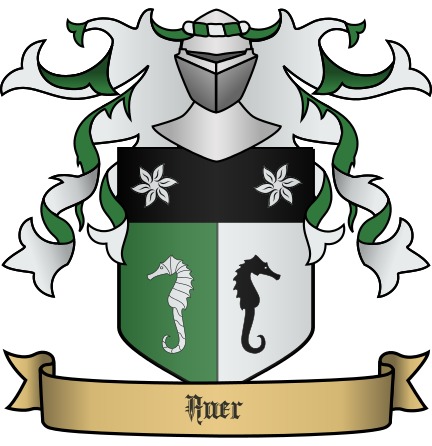
Family Name: Auer
Head of House:
Heir:
Lordship of: Fenway
Fortification: Unfortified.
Status: NPC Household

Family Name: Tolbert
Head of House:
Heir:
Lordship of: East Fork
Fortification: Unfortified.
Status: NPC Household

Knight Houses
Family Name: Conwy
Head of House: Bredon Conwy & Margred Conwy nee Aiken
Knights of the Lake: Bredon, Cadel, Cian, Liam (deceased)
Status: PC Household
Family Name: Porter
Head of House: Anton Porter
Knights of the Lake: Ashton (dishonoured and stripped of title, father of Anton Porter)
Status: NPC Household
The Duchy of Lakeshire sees a variety of geographical changes, from south to north and east to west, the region is diverse.
Lake Kincaid:
The shorelines of Lake Kincaid are consistently rocky from Lakeshire Hold south, due to the craggy foothills of the Western mountain range in which the lake abruptly interrupts, invariably creating the cresting islands within the lake itself. The largest of these islands, called Beacon Hill, is overseen by the Barony of Moselle, whose responsibility extends to include all of the islands in the Lake. Their fortification is Beacon Point, situated at the most eastern face of the isle, with open views of the gates.
Along the east, south and west rim of the lake, sandy beaches are rare, though the coastline shared with Greenshire may see pebble beaches interspersed with dark sandy beaches on the western coastlines. On the north-eastern tip of the lake, the shoreline is muddy and interspersed with marshland reeds concealing the edge of the lake. The shoreline shared with Weston is more firm and sees the dark clay like sand retake.
Northern Lakeshire:
Marshland and plains dominate the northern feature of the Duchy. The marshland, called "The Lost Fens" extends from the north-eastern cove of the lake toward the border shared with Darfield, with a swampy maze of water connecting the waterways – too hazardous for anything more than a row boat. This marshland acts as a last defense against a land bound army heading for the capitol of Darfield. The Lordship holding of Fenway holds the land without a major fortification, living by their motto: "Burn it down and sail away." Fenway harbour is the only safe gateway from northern Lakeshire south. Without ships, travel is forced through the "The Lost Fens" where it is advised against and never with an army.
Fertile plains and forests situate north-west and extend to Weston and Laniveer borders. The plains are suitable for ranching and farming, much of which has already been converted to do so. Small rivers, ponds, and streams can be found in the plains, though nothing to connect the lake to the sea. The coastline of the northern tip of the Duchy provides access to the ocean, with beautiful white sandy beaches. Port towns dot the coastline and the fortification of Halvard's Keep lies to defend the shoreline from Northern invasion.
Eastern Lakeshire:
The east lands of Lakeshire are made of mountains, forests, rich foothills and valleys; of waterfalls, rivers and natural springs. Eastern Lakeshire is claimed to be some of the most beautiful landscape to behold in Mobrin and sees most if not all of the tourism. The infamous hot healing springs can also be found here, near the Barony of East Fork. Also, most of the metal and ore mines are found here, often within the rivers or mountains. The border with Sutherland is held between snowy mountain passes, which often prove to dangerous to cross and thus trade flows south and north, toward the respective borders of Sky Forest and Darfield.
City of Lakeshire
Extending out onto the lake, the city takes on a sense of floating on the water. The water does not buffet the land like a sea or ocean coastline due to the Beacon Isles breaking water for it, thus, allowing the homes and buildings to extend into the water. The City of Lakeshire is partially based off of the real life location of Venice, Italy
Lakeshire Economy is one of the strongest in Mobrin. Lakeshire derives it's income in the following methods:
- Trade
- Tourism
- Fishing
- Agriculture, particularly fruits, berries, and cattle
- Metals, both common and precious, and metalwork
- Ship building (As of year 229 E, Lakeshire gained shipwrights from the Finger Isles and will now be able to produce Carracks and Caravels in the coming years)
Trade, by nature of the beast and the wit of the Ruling family, is a fickle resource. However, the Kincaid's have built their fleet of ships primarily around trade, producing some of the fastest known Mobrin ships in the kingdom, using advancements in science and knowledge of foreign ships to improve domestic designs. Lakeshire merchant ships travel all over Daeren, some with warships for security, depending on the nature of the cargo being hauled. It is not unheard of for a fleet of Lakeshire trade ships to be gone in year long voyages to the far north eastern coasts. Thus as well, the matter of ship building has become entrenched into the economic success of Lakeshire. The taxes collected from the trading industry fully supports what pays the Duchy's tithe to the Crown.
Tourism is a more secure source of revenue and not as volatile as trade. Attractions are the resort mansions lining the coast of Lake Kincaid, the healing hot springs in the southeastern tip of the Lake, and the grand market in the town of Lakeshire. Some of the best healers in the land of Mobrin come from Lakeshire. The Duke of Lakeshire maintains a famous infirmary on the edge of the lake. Many nobles and wealthy merchants travel to Lakeshire for treatment for their various ailments and illnesses. King Callem Kilgour has spent several months in recovery at Lakeshire Castle.
Fishing and Agriculture is a given, considering the vastness of the Lake and the fertile lands on which the Duchy sits. Though these pay considerably less for the effort, the Duchy helps to support the rest of the Kingdom with these two resources.
A surprising but welcomed source of income is from the metals mined from the land. Iron is the primary ore in which is mined and turn to steel. From this metal working has significantly increased in volume over the generations, paired with the rich knowledge in the land, Lakeshire has become home of the worlds greatest smithy's. To have a Kincaid Weapon or Lakeshire Armor, you possess the best killing equipment in the known world. To have a true blade forged from Kincaid steel is a great honor. Silver and gold mines have also been an on going source of revenue.
Knighthood:
Lakeshire does not have an official designation for knights like other Great Houses. They are simply known as Lakeshire Knights, or Knights of the Lake. Men are raised in similar fashion to all other places in Mobrin, though there are fewer in number since the Lake physically dominates half of the Duchy. At any given point there can be from between 100 to 500 knights in Lakeshire, depending on the need.
Rangers:
Due to the political scandal with Hayton Kincaid, the Rangers haven been disgraced over the decades. They are now viewed to be less honourable, thus, their ranks have filled with men who have less scruples than your traditional knight. Most of these men are not looking for glory.
Lakeshire rangers are not typically used for heavy archery like in other areas of Mobrin, though that does not mean rangers are not trained in archery. Instead, the handful of men that remain as rangers are trained in espionage and are utilized to scout deep into the enemies territory. Archers who possess a skill worthy of a ranger but do not wish to be categorized with them, tend to fall in with the infantry of the army.
Infantry:
Lakeshire’s main tactic is numbers and the best weapons for each man on the field. Lakeshire does provide all arms and armor for the infantry soldier, due to the wealth of the Duchy and being able to produce locally. The infantry is a mix of pikers, spearmen, crossbow men, archers, men-at-arms, light cavalry, and siege engineers. While there is no limit to tactic, Lakeshire land based armies prefer to have amassed more pikemen than other houses. Below is a common tactic presented on the battlefields.
Lakeshire’s Pike Square: A pike square generally consisted of about 100 men in a 10×10 formation. While on the move, the pike would be carried vertically. However, the troops were drilled to be able to point their pikes in any direction while stationary, with the men in the front of the formation kneeling to allow the men in the center or back to point their pikes over their heads. While stationary, the staff of each pike could be butted against the ground, giving it resistance against attack. Squares could be joined together to form a battle line. If surrounded, pikes could still be pointed in all directions. A well drilled square could change direction very quickly, making it difficult to outmaneuver on horseback.
Siege Weapons:
With advancements in technology and knowledge, paired with the desire of the Kincaid's to stay competitive with other lands of the world, Lakeshire is one of the primer regions to fashion and build siege weapons. From battering rams of varied designs, to ladders and storming castles, to catapults - Lakeshire takes it upon themselves to continually invest in work projects such as these, having many an inventor rising from the ranks for an approved design. Slow and cumbersome however, siege weapons will take upwards of twice as long to position in place on an open battle field and are thus are only sent if there's a hold or keep to breech - or some varied forms mounted on ships.
Sailors:
The other half of the army is made up of capable seamen, including oarsmen and siege engineers. All men who are officially on 'war ships' flying the Kincaid banner are trained in boarding/counter-boarding techniques, as well as general close quarters fighting methods. Typically, the sailors will often provide support while the army they are transporting beaches.
WIP.
The Faith of the Light is the official religion, but over time the people in Lakeshire have created their own customs and traditions. The lake is a central feature not only in the land, but in everything the people do. All things, from traditional practices and festivals, to the design of their cities rises from depths of the water.
Courtship:
Courtship stems from the Legend of the Lady of the Lake. This tradition has been labelled many names, the most popular and most obvious being “The Lady’s Keep.”
A betrothed woman will lock herself away typically one to three weeks before her wedding – the longer she is locked away, the more she values herself and often the higher her social standing. Kincaid’s get use of the Lakeshire Hold’s tall towers, while the rest of the population choses an accommodation that will secure the bride away from the groom.
The groom will visit, by leave of the family (who represents the lake), and ask his betrothed to come out from her hiding. The first instance by tradition, will be a refusal and a request from the hidden lady for something of the groom’s when he comes by the next time. Her request is never pointed and often vague, allowing the man to decide what to bring and it’s meaning to her request. Such requests will continue during the courtship weeks, until she is sufficiently pleased and accepts his offerings. Nobles will endure longer periods of courtship than the poor. Finally, once the lady has decided she has enough to keep to secure her future with her betrothed, she will unlock herself and seal her promise to marry her betrothed with a kiss.
During her time locked in her tower, the lady must bathe herself every morning before her betrothed comes to ask of her a question, just in case she decides to open the door that morning. Only her family members are allowed to visit her during this time, no one else is allowed to interfere.
Marriages:
Traditionally in the City of Lakeshire, the bride is taken upon a marriage gondola through the city to display her virtues to the crowds that watch on. The oarsman traditionally being her father or eldest brother. The nobility are charged with creating grand displays, anything including falling flower petals to take alight in the wind, grossly decorated gondolas, to an accompany of other gondolas to provide music and singers. Creativity and wealth are the limits here.
Marriage will take place by or on the shoreline of Lake Kincaid. The groom will assist the bride from her gondola once she has arrived, symbolizing her transition to another man’s care. A Temple Priest or Priestess will see the couple through traditional vows of marriage. Other curious customs and superstitions are listed below.
- The Purification: Both bride and groom will take a milk bath to purify themselves before the wedding ceremony.
- The Pinch: It is seen as good luck for women to pinch the bride on her wedding day. Typically as she gets ready for it, though women will continue to try and pinch until she is wed.
- The Lily Exchange: The bride will give the groom a white lily during the ceremony to proclaim her purity and that she is open to receiving him as husband.
- The Blending of Souls: This involves the bride and groom both providing a vase of different colours of sand to pour in a larger clear vase, poured during the ceremony to symbolize their blending of spirits. A majority will choose to use the sand or soil taken from the birth home of both bride and groom, but it is not frowned upon to use gaudy coloured sand instead of natural. It entirely depends on the couple.
- The Bride Dress and Groom Cloak: The bride will be presented in her best dress for the groom, if a commoner, the brightest most colourful dress is the better. If nobility, the bride will be expected to wear a dress to represent the Household heraldry. The groom will also wear attire to represent his house and is expected to wear a cloak so that he may take it off and allow his bride to kneel upon it during prayers, preventing her from sullying her dress and also symbolizing his first act of caring for her, while also symbolizing her acceptance to join his family.
- Post Consummation: After the marriage has been consummated, it is tradition that the couple go skinning dipping under the light of the moon, for the Guardian of the Lake to bear witness and bless their union.
Births:
On the pale light of the first full moon of her pregnancy, a woman will go to the shores of the Lake and submerge her body, where she will drop two tokens into the water held by a length of a string – one to symbolize a girl, the other to symbolize a boy. There she will leave them, to wade out and hand the strings to her husband. He’ll kneel in the water, making sufficient prayer to the Guardian of the Lake, before he will pull upon one string. At the end, he may discover a token for a boy or a girl, increasing his luck to having one or the other. If he finds a broken end with no token, it is an ill omen for the birthing bed, the pregnancy in general, and the future of the child if any.
As a woman is nearing the end of her pregnancy, she will take to spending the last few days near the Lake to hear the sounds of the water. Wealthier families having the luxury of private cottages, the poor may suffer the off shoot of lake fed channels in the cities should they not be able to travel. Women are to purify themselves in a bath every morning and night in this stage of her pregnancy.
For the actual birth, Lakeshire folk firmly believe in having water-births - the act of a woman settled in water rather than standing over a birthing stool. The infant is said to be cleansed from the sins of the mother and father in this style of deliverance. The wealthy will often be cared for in great tubs of warm water, while the poor try their luck with what they have - sometimes the lake itself. This is how they become known as the Lakies, people born of the Lake.
Funerals:
The most important thing to note is that the people of Lakeshire do not bury their dead.
The wealthiest will hire a Funeral ship to cast off their deceased loved one into the deepest parts of the Lake, where the members of Kincaid are said to lie with the Guardian of the Lake. The celebration consists of the dead being placed into a small wooden boat, surrounded by lake lilies, and set ablaze once cast off. Sometimes, paper lanterns will be set adrift in the water or released into the sky to mark the occasion. There will always be song and prayer included.
The rest of the people who cannot afford the grand Funeral ships, manage the same ceremony for the most part, hiring whatever sea craft will ensure their loved ones make it out into the lake. The very poorest will carry the dead wrapped to the Temple. Here cremations can be managed at the Temple charity, ashes returned to the family to scatter as they see fit.

Guardian of the Lake know as The Old One:
The people of Lakeshire believe in the legend of the Guardian of the Lake so fiercely, that he has become their central figure in marriage, birthing, funeral, and other such spiritual customs.
Commonly referred to in casual conversation as the Old One, it is believed he was once a man named Domninus Kincaid, given himself up from the world of man to be with the Lady of the Lake. Others suggest that the Old One can be traced back to the beginning of time, a Guardian vassal placed by the Eight upon the waters to watch over it.
The people pray to the Guardian for safe passage, for blessings upon their marriages, for protection of their children, and to carry them sweetly to paradise upon their deaths. Misfortune will befall those who wish to live by his waters and fail to pay homage to the Guardian. Thus, he is revered by sailors, whom will most certainly throw tokens into the water to please his might and seek his protection as they seek passage upon his waters. It is said the rulers of the land were chosen by the Guardian of the Lake and he demands them without fail to return to his great watery Halls upon their death.
He comes in the image of a giant serpent, surfacing when fog hovers close to the water or at night when the moon paints the waters with its soft silvery light. He is said to be larger than the ships that ply the waters, considered a dragon, often in serpentine guise. He is represented by a blue drake or water dragon in various forms of art, becoming center pieces in every walk of life.
It is he who is told to be the reason why a boat fills with fish or another is safely shown to harbour before the onset of a storm. It is he who brings back a drowned man to a second chance to escape a watery grave, it is he who controls the weather, the wind, and the fortunes of all upon the waters.

Lady of the Lake:
A young man, Domninus Kincaid, came to the Lake and built himself a small cabin to live by. As time went on, the young man constructed his own small boat and had started to fish the lake, making a meager earning when he went to travel to the village to trade. It was a long journey, so long, that no family wished to see their daughter married to him. In time, he became lonely with this isolated life. From his loneliness came the sweet ballad songs of which he sang, so beautiful in fact that it is told that fish would jump into his boat to hear it.
One day, as he rowed out upon the lake, he came across the submerged ruins of a lost dynasty. A single broken spire still stood and rose high out of the water. However, he tossed out his line and began fishing, soon taking to singing to pass the time. He then heard a voice, feminine in its call, joining with him as he sang. He tried to coax her out of hiding after the song ended. She denied him the first time and told him to return the next day with his most expensive possession and throw it in the water, if he truly wanted to see her. The young Domninus was determined and rowed back to his house. He found it hard to make up his decision, for he was poor and had hardly a thing to his name.
In the morning he rowed out into the lake and tossed in his father’s ring, the only precious thing he had worth any monetary value; the onyx gemstone in a silver band sunk quickly to the bottom of the lake. Fearing that was not what she meant, he started to sing again, immediately hearing her voice join in with his. When he asked her to come out, she denied him and this time asked him to return in the morning with that which kept him fed.
While disappointed, he did return the next morning after spending a long night thinking of what it was that provided him with food. With a smile, he took to the row boat out to the ruins and tossed into the water the fishing hook which had provided for him. Once more, she refused him after song, and told him to come back in the morning with a guarantee that he would not leave her if she came out.
The next day, he rowed out and then tossed in his boots, telling her the path to the village was so far that to walk it bare foot would be foolish and so he could never leave without a good pair of boots. She refused to come out yet again and told him to return in the morning with something that would prove his love.
In the morning he returned and belched out a most romantic song that he spent the night writing. To prove his love he promised her his song would only be for her ears and to prove it so he would marry her. Still she refused him and now asked for the most dearest gift that he could give her and if he did so, she would marry him.
Not wanting to be alone, and thoroughly in love with the mysterious lady of the lake, he rowed out the next morning determined to prove how far he would go for her. He gave her his most dearest gift he could manage; his body, the whole of his soul, the depths of his love, his life, which was hers entirely. He leapt from his boat and allowed the water to submerge him.
And there she was, rising to meet him; a woman with beautiful pale flesh and green scales. She was wearing his onyx ring to hold what was most valuable to him, bearing a fish for dinner baited with his hook he gave her, with his boots on her feet keep to him from wandering, sealing them in marriage as she answered with a yes, as her arms embraced him and pressed upon him the kiss of transformation, forever holding him in those depths, listening to his song.

The Lily Festival
Celebrated on the 5th Day of Nar, the Lily Festival started back in the early days of village life prior to Empire rule. The wild water lilies would multiple like weeds in the shallows, making fishing a rather impossible task and since boats were limited, shore fishing net and fly fishing were often the way to go. The local villagers at that time would have to wade into the shallows and harvest the lilies to make areas for fishing. Typically the lotus could be used for medicinal purposes and in cooking, so the harvest was not a waste.
Today, as ships can easily escape the shallows of lily clogged waters, it has become a more traditional festival than one necessary for survival. People will wade still out into the water and harvest the lilies and blooms, including them in everything from decorations, to cooking, to medicines.
Typically, after the harvest, there will be one large celebration sprawling through the streets and several cook pots to make delicious meals from the use of the lily. Song and dance will accompany the festival, as well as a display of tokens sacrificed into the waters at night, to honour their Guardian of the Lake.
The Day of Harmony
Coinciding with Alasair 30, the day of the Equinox, is the Day of Harmony. The celebration is reflective to the sun and the moon spending the same amount of time in the sky as each other, symbolizing that men and women are equally important, as all things opposite are.
The day is for the women. If a woman is married, her man will often dote on her like her personal servant, allowing her to ask anything of him or of herself. She is allowed to do what she wishes and desires. If she wishes to ride and hunt, then she shall. No man can tell a woman what to do on this day, for it is seen as dishonouring the Harmony of life. No man may fault a woman for what she does on this day - though if married, woman is supposed to honour her vows by taking her husband to bed if she lusts.
The night is for the men. If a man is married, he may find his wife doting on his every need. He may also ask of his wife anything and she must comply. He is allowed to do what he wishes and desires. If he wishes to drink and gamble all night, then he shall and he shall not be faulted for it. No woman may fault a man for what he does on this night - though if the man is married, he is supposed to take his wife to bed if he lusts.
Often, plays, storytelling, and music become the focal point of the day. By night, debauchery and sportsman fighting.
 |
 |
 |
 |
 |
 |
 |
 |
 |
 |
 |
 |
 |